From the Glass to the Grill: The Ultimate Guide to Scotch Cocktails and Steak Pairings
Spirits & Cuisine · Art of Pairing
Introduction: The Marriage Nobody Taught You About
Most people learn wine pairings in school, at dinner tables, or from a confident sommelier who leans in and whispers something about tannins. Nobody teaches you about scotch and steak. That knowledge gets passed down in back rooms, at the end of long barbecue nights, and behind bars where the bartender knows your name and your order before you sit down.
That changes today.
Scotch whisky and beef share a relationship so fundamentally sound that once you understand its logic, you’ll wonder why you ever reached for anything else. These are two of the most complex flavor systems human civilization has ever produced — one shaped by earth, water, barley, and years of dark silence inside oak; the other by fire, salt, protein, and the precise moment a cook decides the crust is exactly right. When they meet at the same table, they don’t simply coexist. They collaborate.
This guide is built for anyone who wants to move past guesswork and into genuine understanding. You’ll find modified cocktail frameworks, original pairing concepts, cut-by-cut recommendations, flavor science explained plainly, and enough working knowledge to build your own pairings from scratch — at home, at a restaurant, or anywhere a good bottle and a cast iron pan happen to be in the same room.
Part One: Understanding the Flavor Architecture of Scotch
Before you can pair scotch with anything, you need to know what you’re actually tasting. Scotch is not a monolith. It is a family of wildly different spirits that happen to share a country of origin and a legal definition. The differences between a Lowland single malt and a full-strength Islay expression are as dramatic as the differences between a filet mignon and a bavette steak — same animal, completely different experience.
Here is how the major scotch regions break down in terms of flavor and why those differences matter when meat is on the table.
The Highlands: The All-Rounder
Highland scotches are the most varied of all the regions, which makes them both the most versatile pairing option and the most challenging to generalize. As a rule, they tend toward heather, dried fruit, honey, and gentle spice — think Christmas cake without the cloying sweetness. The mouthfeel is often medium to full, and the finish is long without being aggressive.
At the table, this makes Highland expressions natural partners for cuts with real character — hanger steak, bavette, skirt, and bone-in cuts that bring iron-rich intensity to the plate. The scotch meets the beef’s boldness without overpowering it, and the heather note in many Highland drams creates an aromatic bridge that makes herb-seasoned preparations sing.
Speyside: The Elegant Intellectual
Speyside is where elegance lives. Home to more distilleries than any other Scottish region, it produces whiskies built on pear, apple, vanilla, almond, and in sherried expressions, Christmas spice and dried plum. These are whiskies of nuance and restraint — they reward attention rather than demanding it.
At the table, Speyside expressions belong beside the more refined cuts: dry-aged strip, filet mignon, prime rib sliced thin. Their sweetness creates a counterpoint to the concentrated umami of aged beef, and their vanilla register plays beautifully alongside the caramelized crust that a good sear produces. If you are pouring Speyside, you are pairing intellect with elegance.
Islay: The Bold Conversationalist
Islay scotches are the ones that announce themselves before they arrive. Driven by phenolic peat smoke, coastal brine, iodine, and sea spray, they are the most polarizing whiskies in Scotland and the most thrilling to pair. Their phenolic compounds — guaiacol and 4-methylguaiacol, specifically — are chemically similar to the aromatic compounds produced when meat chars over open fire.
This means Islay scotch and charcoal-grilled beef are not a contrast pairing. They are a harmony. Both have been marked by smoke. Both carry the memory of fire. When you sip Laphroaig or Ardbeg alongside a ribeye that just came off a live-fire grill, you’re not bridging a gap — you’re deepening a conversation that both subjects were already having.
Lowland: The Quiet Opener
Light, grassy, and citrus-forward, Lowland scotches are often dismissed as gentle to the point of timidity. In a pairing context, that restraint becomes a virtue. They work as aperitif-style accompaniments — drinks that prepare the palate rather than anchor it, that refresh rather than saturate. Pair them with lighter preparations: a lean sirloin with chimichurri, a carpaccio-style presentation, or a thin-cut minute steak with little more than coarse salt.
Campbeltown and Islands: The Wild Cards
Campbeltown produces whiskies with a characteristic brininess and slight mustiness that makes them exceptional partners for heavily seasoned beef — think a Montreal spice-rubbed striploin or a dry-aged cut with blue cheese compound butter. Island scotches (Skye, Orkney, Mull) sit between the restraint of the Highlands and the smoke of Islay, offering something for nearly every cut depending on the specific expression.
Part Two: Understanding the Cuts
Steak is not simply a piece of beef cooked over heat. Every cut comes with its own fat content, fiber structure, cooking method requirements, and flavor personality. The pairing logic you apply to a Wagyu flat iron is completely different from what you’d apply to a lean eye of round.
Here is a working map of the major cuts and what they bring to a pairing:
High-Fat, High-Flavor Cuts
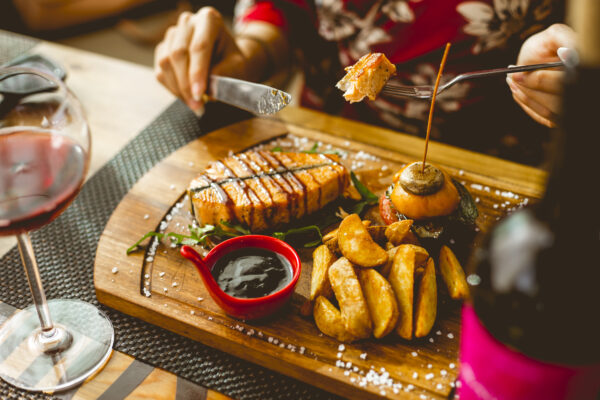
The ribeye, tomahawk, Wagyu flat iron, and T-bone all belong in this category. These are cuts where rendered intramuscular fat — marbling — is the dominant flavor mechanism. As the fat melts during cooking, it bastes the muscle from within, producing a buttery, rich mouthfeel and a flavor that lingers long after the bite.
For these cuts, you need a scotch or scotch cocktail with enough body and assertiveness to keep pace. A delicate Lowland dram disappears next to a Wagyu ribeye. You need the weight of a peated Islay expression, a sherried Highland malt, or a blended Scotch with real grain backbone.
Umami-Forward Cuts
Dry-aged strip, dry-aged ribeye, and hanger steak fall here. Aging concentrates flavor by breaking down proteins and reducing moisture content, intensifying the beef’s natural savoriness to an almost funky depth. These are cuts that taste of themselves — deeply, unapologetically beefy.
For dry-aged cuts, you want a scotch with fruit-forward complexity. Speyside expressions work brilliantly because their pear, apple, and light spice notes create contrast against the meat’s concentrated savory weight. The sweetness in the whisky frames the umami rather than competing with it.
Lean, Fibrous Cuts
Skirt steak, flank, bavette, and hanger steak (in its leaner preparations) are cuts that reward high heat and quick cooking. They have less fat than a ribeye but more flavor per pound than a filet. Cooked medium-rare and sliced against the grain, they are intensely satisfying in a different way — all texture and iron-rich depth.
These cuts pair beautifully with cocktails that include an acid component, because the lack of fat means the palate doesn’t need the same reset mechanism. A scotch sour, a highball with citrus, or a cocktail built around a lighter Highland expression works perfectly here.
The Filet: Tenderness Over Intensity
The filet mignon is the most texturally luxurious cut and the least aggressively flavored. Its appeal is entirely tactile — yielding, almost impossibly soft, with a gentle beef flavor that can be overwhelmed easily. For this reason, the filet needs a pairing partner that brings flavor to the table without dominating the conversation.
Effervescent scotch cocktails — highballs, sparkling scotch sours — are ideal here because the carbonation lifts the flavors and keeps the palate alert, while the spirit adds complexity without heaviness.
Part Three: Eight Original Pairing Concepts
What follows is a set of entirely original pairing concepts built on the flavor architecture described above. Each includes a cocktail format, a recommended scotch style, and the reasoning that connects the drink to the dish.
Concept 01 — Fire Calls to Fire
Cocktail style: Peated Scotch Smash Steak: Charcoal-grilled bone-in ribeye
Build a simple smash with a peated Islay expression, fresh lemon, a barspoon of raw wildflower honey, and muddled fresh thyme. Shake briefly over ice and strain into a rocks glass. The cocktail is intentionally rustic — it isn’t trying to be polished. It is trying to match the primal energy of beef cooked directly over charcoal.
The thyme echoes any herb seasoning on the steak. The lemon cuts the rendered ribeye fat cleanly. The peat smoke wraps around the char on the crust like a second layer of fire. This is not a subtle pairing. It is a direct and honest one.
Concept 02 — The Orchard and the Aging Room
Cocktail style: Speyside Sour with verjuice Steak: Dry-aged New York strip, 45-day minimum
Replace the standard lemon component in a classic whisky sour with verjuice — the tart, fresh-pressed juice of unripe wine grapes. It brings acidity without citrus sharpness, a softer tartness that doesn’t overwhelm the whisky’s fruit notes. Use a Speyside expression with strong apple and pear character. Add a full egg white for texture and finish with a single drop of white truffle oil on the foam.
The verjuice mirrors the gentle acidity of dry-aged beef. The truffle oil bridges the earthiness of the aged crust. The pear in the whisky meets the concentrated umami of the strip and creates a resonance that neither element could achieve independently.
Concept 03 — The Cattleman’s Stirred Drink
Cocktail style: Scotch and Amaro Old Fashioned Steak: Wagyu flat iron, compound herb butter
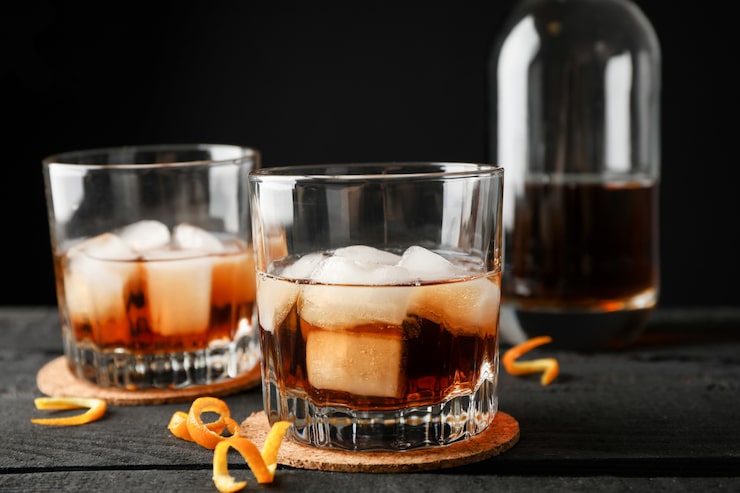
Build on the Old Fashioned template but replace a portion of the sweetener with a bitter Italian amaro — Averna works exceptionally well. Use a blended Scotch with strong grain character as the base. Add a single large ice cube and express a grapefruit peel instead of orange.
The amaro brings herbal bitterness that cuts through Wagyu’s extraordinary fat without using acid, which would clash with the butter component on the steak. The grapefruit peel adds brightness without sweetness. The result is a cocktail that feels simultaneously rich and digestive — designed to keep the meal moving rather than bringing it to a standstill.
Concept 04 — Smoke and Spice from Two Directions
Cocktail style: Mezcal-Scotch blend highball Steak: Skirt steak, ancho chili dry rub, served with salsa verde
This concept breaks from pure scotch territory by blending a Highland single malt with a small pour of mezcal in a 3:1 ratio, then topping with spiced ginger beer and finishing with a few drops of habanero tincture. The mezcal adds agave-driven earthiness and a different register of smoke that complements the ancho chili rub without replicating it.
The spiced ginger beer keeps everything moving. The habanero tincture, used sparingly, doesn’t add heat so much as an aromatic warmth that makes the salsa verde’s herbaceous acidity feel more vivid. This is fusion pairing — two smoke traditions, two continents, one glass.
Concept 05 — The Contemplative Pour
Cocktail style: Sherry-cask Scotch Manhattan variation Steak: Tomahawk, wood-roasted, served with bone marrow on the bone
Use a sherry-finished Highland expression — something with 12 to 15 years in first-fill Oloroso casks — and build a Manhattan variation with Punt e Mes instead of standard sweet vermouth. Punt e Mes is bittersweet, orange-forward, and complex in a way that standard red vermouth is not. Add a full dropper of black walnut bitters and stir for 40 rotations.
The Oloroso sherry influence in the whisky — dried fig, dark raisin, cocoa — mirrors the extraordinary richness of roasted bone marrow. The walnut bitters introduce tannin structure that acts like a grip beneath the sweetness. This is a pairing designed for a long, slow dinner that ends close to midnight.
Concept 06 — Coastal Breeze Before the Fire
Cocktail style: Islay Gin and Scotch Collins Steak: Filet mignon wrapped in pancetta, herb-crusted
This concept uses a 2:1 blend of a floral gin and a lightly peated Islay expression as the base, lengthened with elderflower tonic and fresh cucumber ribbon. The result is long, cool, aromatic, and gentle — a drink that refreshes the palate between bites of the most tender and delicate cut available.
The pancetta wrapping on the filet adds the saltiness and fat that the lean tenderloin lacks on its own, and that salt element amplifies the floral quality of the elderflower tonic. The cucumber ribbon brings a freshness that resets the mouth without acid. Between sips of this cocktail, each bite of herb-crusted filet tastes like the first.
Concept 07 — The Farmhouse Accord
Cocktail style: Blended Scotch and Apple Brandy split base Steak: Hanger steak, pan-seared, with caramelized onion and blue cheese
Split the base 50/50 between a grain-forward blended Scotch and a French apple brandy (Calvados). Add house-made rosemary simple syrup and a generous measure of dry vermouth in place of sweet. Stir and serve straight up in a chilled coupe.
The apple brandy brings orchard fruit that softens the hanger steak’s iron-rich intensity. The rosemary syrup creates a bridge to the herb character that caramelized onions develop after long, slow cooking. The blue cheese on the steak amplifies every aged and fermented note in both spirits at once — a reminder that cheese and whisky share more chemistry than most people realize.
Concept 08 — The Long Night Closer
Cocktail style: Smoky Scotch Negroni Steak: Prime rib, slow-roasted, served au jus
Substitute a heavily peated Islay expression for the gin in a classic Negroni. Keep the Campari. Replace the sweet vermouth with a 50/50 split of Carpano Antica and Cocchi Americano, which introduces a gentler bitterness and a wine-like freshness. Stir for 35 rotations. Serve over a large cube with a charred orange peel.
The slow-roasted prime rib, finished in its own juices, has a depth of flavor that demands a cocktail of equal seriousness. The Campari’s grapefruit bitterness cuts through the richness of the au jus and the beef fat. The Islay base wraps everything in a slow, rising smoke that makes the meal feel like it’s still cooking even after the plate is empty. This is the last drink of a great evening — designed to be remembered.
Part Four: The Principles Behind Every Great Pairing
You don’t need to memorize recipes to pair scotch and steak well. You need to understand a small set of principles that make the logic transferable to any situation — any bottle, any cut, any occasion.
Match the Weight of the Drink to the Weight of the Cut
Weight is the most fundamental dimension of any pairing. A rich, fatty cut like a Wagyu ribeye needs a spirit with enough body and flavor intensity to stand beside it — something with richness of its own. A lean, quickly cooked skirt steak can handle something lighter and more refreshing. The mistake most people make is reaching for a delicate drink with an aggressive cut, or overwhelming a restrained preparation with a too-powerful spirit. Get the weight relationship right first and the flavor details become much easier to resolve.
Use Acid Strategically
Fat and alcohol have a complex relationship. Fat coats the palate and can mask the whisky’s aromatic complexity. A well-placed acid component — whether in the cocktail or as part of the dish preparation — wipes the fat film from the tongue and allows the whisky to be tasted cleanly with each subsequent sip. Lemon juice, verjuice, dry vermouth, Campari, and even certain bitters all perform this function. They are not flavor additions so much as palate maintenance tools.
Amplify, Don’t Neutralize
The instinct to contrast is often wrong in the context of steak and scotch. Reaching for a fresh, light drink to cut through a smoky, charred steak sounds logical but usually produces a pairing where each component diminishes the other rather than lifting it. Amplification — finding the shared notes between the drink and the dish and intensifying them through the combination — produces more memorable results. Smoke with smoke. Fruit with caramelization. Spice with spice.
Temperature and Dilution Are Not Afterthoughts
A stirred cocktail that is under-chilled will be too boozy and too aggressive at the table. A shaken cocktail that is over-diluted will be watery and flat. These are not small calibrations — they fundamentally change the pairing experience. Stirred drinks should reach approximately minus six degrees Celsius. Shaken drinks should be served immediately and consumed within eight minutes before dilution compromises their structure. The care you put into the steak should be matched by the care you put into the glass.
Sequence Matters as Much as Selection
The cocktail should arrive before the steak, never after. Five minutes is ideal — enough time for the first sip to prepare the palate and signal that something considered and intentional is about to happen. Serving both simultaneously is acceptable. Serving the cocktail after the steak has been eaten reduces it to a digestif, which is a different conversation entirely.
Part Five: Building Your Own Pairing at Home
You don’t need a professional bar program or a Michelin-starred kitchen to execute these ideas. You need a bottle of scotch you understand, a cut of beef you respect, and a willingness to taste deliberately rather than casually.
Start with one of the eight concepts above that feels achievable with what you already have. If you own a bottle of blended Scotch, begin with Concept 03. If you have a peated Islay expression, Concept 01 requires almost nothing else. Build the cocktail while the steak rests — the resting period (seven to ten minutes for most cuts) gives you exactly the time you need.
Taste the cocktail before the first bite. Register its flavors. Then take the first bite and sip immediately after. Note what changes. Note what the steak brings out in the drink and what the drink does to the steak’s finish. This is not a test — it is a practice. Each time you do it, your palate builds vocabulary. After a handful of sessions, you will develop intuitions that no guide could hand you directly.
The most important thing is to be present for both. The steak deserves attention. So does the glass. When both receive it, the pairing becomes more than the sum of its parts.
Closing: On the Pleasure of Understanding
There is a particular satisfaction that comes from understanding why something works rather than simply knowing that it does. Anyone can be told that peated scotch pairs with charcoal steak. Knowing why — the shared phenolic compounds, the Maillard reaction, the amplification of smoke by smoke — transforms that pairing from a rule you follow into a principle you own.
That ownership is what this guide is ultimately about. Not recipes to reproduce exactly, but logic to carry with you to every table, every bar, every occasion where a good bottle and a great piece of beef happen to arrive at the same moment.
Whisky took years to become what it is. A great steak takes patience, heat, and timing. Neither deserves to be rushed, second-guessed, or paired carelessly.
Give both the attention they’ve earned. The reward, as always, is in the tasting.
Food & Spirits Editorial · All pairings and concepts original · For the table that takes its pleasures seriously
About Tartan of Redlands
Tartan of Redlands, established in 1964, has long been more than just a restaurant—it’s a community gathering place. Founded by the Ctoteau brothers, the vision was simple: serve great food in a warm, welcoming environment where guests feel at home.
Over the years, that spirit has remained unchanged, even as ownership evolved—from Larry Westin to his son, and now Jeff and Lisa Salamon, who continue to honor its legacy with a strong focus on service and community.
Known for its classic steakhouse menu, Tartan is a local favorite for prime rib, quality steaks, and its signature burger, all complemented by a full bar. Often called the “Cheers of Redlands,” it’s a place where familiar faces return again and again.
More than six decades later, Tartan remains a place where great food meets a genuine sense of belonging.