Desserts in Redlands: Crème Brûlée, Cheesecake, and the Tartan Special — How Tartan of Redlands Closes Every Meal Like It Means It
Published in: Inland Empire Eats | Dining Features
There is a particular kind of satisfaction that comes at the end of a great meal — not from being full, exactly, but from feeling like the kitchen saw the whole dinner through from beginning to end with the same level of care. The appetizer set the tone. The entrée delivered on what the appetizer promised. And then the dessert arrived and didn’t just coast on goodwill. It has rightfully secured its spot.
A Rarity in Dining: Thoughtful Desserts That Complete the Experience
This is rarer than it sounds. Many restaurants that take their main courses seriously treat dessert like an epilogue — a perfunctory gesture toward sweetness, something to fulfill the structural expectation of a three-course meal without genuinely investing in what lands last. It’s an understandable temptation. Dessert doesn’t drive the reservation. It doesn’t get the Instagram moment the steak does. People don’t typically walk through the door of a steakhouse because they’ve heard the cheesecake is extraordinary.
But at Tartan of Redlands, they probably should. Tartan has been serving Redlands since 1964. Six decades of community dinners, date nights, celebration meals, and quiet Tuesday evenings at the bar. In that time, a reputation accumulates — not just for the cuts of beef or the soup or the cocktails, but for the full arc of the experience. The dessert menu at Tartan is a direct expression of that philosophy: a focused, uncluttered selection of three items, each one executed with genuine intention. The Homemade Crème Brûlée. The New York Cheesecake. The Tartan Special.
Three desserts. That’s it. And each one tells you exactly who this kitchen is.
The Philosophy of the Short Dessert Menu
Before getting into the specifics of what’s on offer, it’s worth pausing on the decision to offer only three desserts in the first place. In an era when menus have swelled to catalog proportions — where choices multiply in inverse proportion to how carefully each one is considered — Tartan’s restraint is a statement.
A short dessert menu communicates something important: these are the things we make well, and we’re confident enough to let you choose among them without overwhelming you into indecision. It suggests that every item that made the cut did so because the kitchen tested it, refined it, and stood behind it fully — not because it was easy to produce in volume or because it had a high enough profit margin to justify the space.
Three desserts means three opportunities to get things exactly right. And for a kitchen with the experience and consistency that Tartan brings to every service, that’s more than enough.
Homemade Crème Brûlée: The Dessert That Has Stopped Conversations
Let’s begin here, because this is the one that regulars mention without being asked. Crème brûlée occupies a particular position in the hierarchy of classic desserts. On its surface, the concept is almost embarrassingly simple: custard beneath a layer of caramelized sugar. But the execution is deceptive in its demands. The custard must be smooth to the point of feeling almost weightless — no graininess, no lumps, no evidence of eggs scrambled rather than tempered. The vanilla infusion has to be present but not aggressive, a background note rather than a flavor that announces itself loudly and then has nowhere to go. The temperature when it arrives at the table matters: too cold and it loses its silkiness; too warm and the structural integrity of the custard begins to soften toward soup.
The Caramelized Sugar Crust: The Key to Perfection
And then there’s the top. The caramelized sugar crust is the thing that either makes or ruins a crème brûlée, and it’s the thing that most restaurants get wrong in one direction or the other. Too thin, and it shatters into fragments before you’ve even picked up the spoon — you end up eating separate components rather than a unified dessert. Too thick, and it requires the kind of aggressive effort that feels wrong at the end of a relaxed meal. The right crust has just enough resistance to create that satisfying, unmistakable crack when the spoon hits it, giving way to a caramel layer that’s still slightly pliable, bridging the gap between the crunchy surface and the cool custard beneath.
At Tartan, the Homemade Crème Brûlée is the kind that has stopped conversations at tables. Guests lift the spoon, break through the surface, and go quiet for a moment — which is, in restaurant terms, the highest possible compliment a dessert can receive. The fact that it’s made in-house isn’t a minor detail; it’s the entire point. House-made crème brûlée means a kitchen that controls every variable, from the quality of the cream to the precise temperature at which the custard is set. You can taste the difference between a crème brûlée that was prepared that morning for that evening’s service and one that arrived in a container from a supplier. At Tartan, you’re getting the former.
This is also, according to longtime guests, a dessert generous enough to share comfortably between two people — which is either a compelling reason to order it on a date night or a perfectly good justification to keep the whole thing for yourself. Both are valid positions.
New York Cheesecake: The Benchmark Dessert Done Properly
There is an argument to be made — and it’s a compelling one — that New York cheesecake is the most complete dessert in the American canon. Not the most exciting. Not the most technically demanding. But the most complete: dense enough to be satisfying, rich enough to feel indulgent, familiar enough to meet you wherever you are emotionally, and versatile enough to work at the end of virtually any meal.
The Importance of a Perfect Crust
The “New York” designation isn’t merely geographical pride. It refers to a specific style: a filling built primarily on cream cheese, heavier and more substantial than its lighter Italian or Japanese counterparts, with a dense, compact crumb that pushes back slightly against the fork before yielding cleanly. The flavor is tangy, almost savory at the edges, which is precisely what gives New York cheesecake its longevity — it doesn’t cloy the way sweeter desserts can, so you can eat more of it without the pleasure diminishing. The sweetness is present but restrained, a supporting element rather than the entire point.
The crust matters more than most people think. A good cheesecake crust provides structural contrast — the slight crunch beneath the smooth filling creates a textural duet that makes every bite more interesting than either component would be alone. A thin, uniform, properly compacted base is the silent backbone of the whole dessert, and getting it right is more difficult than it looks.
At Tartan, the New York Cheesecake is prepared with the seriousness the style deserves. This isn’t a refrigerated slice retrieved from somewhere out of view; it’s a dessert the kitchen takes ownership of, presenting it in a way that reflects the same care brought to every other plate that comes out of that kitchen. The richness is exactly where it should be — present and satisfying without sliding into heaviness. The tang is alive. The crust holds.
It’s also a dessert that pairs remarkably well with dessert wine, which happens to be one of Tartan’s particular strengths — more on that shortly.
The Tartan Special: The Dessert That Belongs Only to This Restaurant
And then there’s the Tartan Special — which is, without question, the most interesting item on the dessert menu, and the one that most clearly reflects the restaurant’s identity.
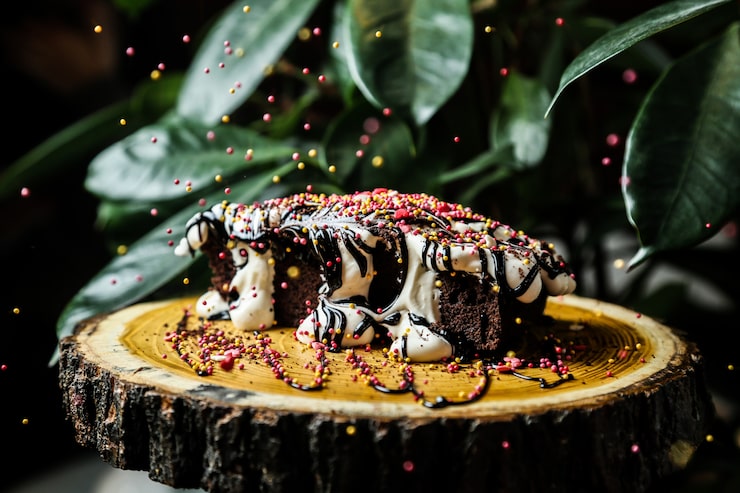
The Tartan Special is a chocolate caramel pecan construction designed to be shared between two people. The combination of these three elements — bittersweet chocolate, warm caramel, and toasted pecans — is not accidental. Each one pulls in a slightly different direction, and the interplay between them is what makes the dessert memorable rather than simply pleasant.
The Perfect Balance of Flavors
Chocolate carries the bitterness and depth. Dark chocolate, handled well, has a complexity that can rival wine — fruity, roasted, tannic, earthy. It’s the anchor of the dessert, the element that keeps sweetness from becoming cloying.
Caramel brings the warmth. There’s a reason caramel is one of the most universally appealing flavors in the dessert vocabulary: it bridges dairy and sugar in a way that feels deeply familiar, carrying notes of toffee and butter that read as comfort. When caramel is made properly — cooked to the exact temperature where the sugar has darkened but hasn’t crossed into bitterness — it introduces a depth that simple sweetness cannot replicate.
Pecans bring texture and a nuttiness that grounds the whole composition. The slight crunch against the smoothness of caramel and chocolate keeps the dessert interesting across multiple bites, preventing the palate from going numb the way it can with uniformly soft sweets.
The fact that this dessert is designed for two people is worth noting for what it implies about the experience: this is a dessert meant to extend the meal, to give two people a reason to stay at the table a little longer, to finish the wine and have something to share while the evening winds down naturally. It’s social in its design, built for the particular pleasure of ending a good dinner in good company.
It’s also a dessert that’s specific to Tartan — something you cannot replicate elsewhere, because it was developed by and for this kitchen, this restaurant, this community. That specificity is its own form of value. In a dining landscape where menus can feel interchangeable, a dish that belongs only to one place is worth seeking out.
Dessert Wine: The Argument for Not Skipping the Last Course
One of the more underappreciated aspects of Tartan’s full menu is the dessert wine selection, which offers something genuinely thoughtful for guests who want to extend the beverage experience through the final course.
The Far Niente “Dolce” is perhaps the most prestigious offering on the dessert wine list — a Napa Valley late-harvest blend of Semillon and Sauvignon Blanc that occupies the upper tier of American dessert wines. It carries the honeyed richness characteristic of the style without surrendering the acidity needed to keep it from feeling heavy. Against the crème brûlée, it’s a pairing of considerable elegance — the wine’s stone fruit and apricot notes finding a natural companion in the vanilla custard.
The Royal Tokaji “5 Puttonyos” from Niagara represents a different tradition entirely — the Hungarian Aszú style, one of the oldest dessert wine categories in the world. Botrytized and intensely concentrated, it brings a complexity that rewards slow sipping. Paired with the New York Cheesecake, the Tokaji’s bright acidity cuts through the richness of the cream cheese filling in a way that refreshes the palate with each alternating bite and sip.
For the Tartan Special, the Pallini Limoncello offers an unexpected but effective counterpoint — its citrus brightness slicing cleanly through the chocolate and caramel, resetting the palate and creating a contrast that makes both the dessert and the digestif more interesting than they would be alone.
The Right Moment for Dessert at Tartan
There’s a cultural habit in American dining of treating dessert as optional — something to consider only after establishing that the meal didn’t already exceed some internal caloric threshold, to be declined somewhat apologetically when the server offers it. This habit, while understandable in principle, misses something important about what dessert actually does for a meal.
Dessert isn’t about the calories. It’s about the ending. A great meal without dessert is a story that stops mid-sentence. The palate has been through a full arc — the bright acidity of a salad, the savory depth of a perfectly cooked steak, the richness of whatever accompanied it — and then it simply stops. Dessert provides the resolution, the final flavor note that tells your senses the meal is complete. It’s the reason you remember the dinner the next day and think of it fondly rather than having it simply dissolve into the general memory of food eaten.
At Tartan, where the meal has been built with enough care and intentionality to genuinely merit a proper ending, skipping dessert is something close to a missed opportunity. Not a catastrophic one, certainly. But a meal that ends with the crème brûlée, or the cheesecake, or the Tartan Special — that’s a meal that completes itself.
Order the dessert. Have one more glass of something good. Let the evening finish the way it deserves to.
Practical Notes Before You Go
- The dessert menu is deliberately concise. Three items means the kitchen makes them well and consistently. Don’t arrive expecting an elaborate pastry cart, but expect three excellent choices.
- The Tartan Special is meant for two. If you’re dining solo, the crème brûlée or cheesecake is the more appropriate solo order — though no one will stop you from enjoying the Tartan Special alone.
- Check dessert wine availability. The wine list, including dessert wines, can vary with the season and availability. If a specific bottle has caught your attention, calling ahead is worth the effort.
- Happy Hour is available every day from 3 PM to 6 PM. Arriving early means you can pace your evening with cocktails, dinner, and dessert without feeling rushed.
- Reservations are recommended, particularly on weekends. Tartan fills up, so arriving with a table ready ensures a smooth visit.
The Final Word
In a city that has seen restaurants come and go over six decades, Tartan of Redlands remains a constant. Not just due to nostalgia, but by consistently preparing great food, treating guests well, and respecting the art of dining.
The dessert menu at Tartan is a small but telling window into that philosophy. Three items, each crafted with care. A crème brûlée that stops conversations. A New York cheesecake that hits every note. And the Tartan Special, a dessert that belongs only to Tartan.
The best meals don’t just fill you up. They leave you thinking about when you’re coming back. At Tartan of Redlands, the dessert is often the reason you start planning your return before the bill arrives.
Menu items, dessert wine selections, and pricing are subject to change. For the most current information, visit tartanofredlands.com.
About Tartan of Redlands
Tartan of Redlands, established on April 15, 1964, is a cherished local steakhouse known for its classic dishes and community-focused atmosphere. Founded by the Ctoteau brothers, the restaurant has been passed down through generations, with Jeff and Lisa Salamon currently owning it since 2015.
Jeff Salamon, a Marine Corps veteran, continues the legacy with a focus on loyalty, tradition, and community. The menu highlights popular dishes such as the Saturday prime rib, top-quality steaks, and the signature Tartan Burger, all paired with a well-stocked bar.
Often called the “Cheers of Redlands,” Tartan is loved for its relaxed vibe, excellent service, and loyal patrons, offering both indoor and outdoor seating year-round.