The Philosophy Behind Pairing Music with Prime Beef
There is something almost alchemical about the moment the first chord meets the clink of crystal, when a room full of strangers discovers it is sharing not just a meal but an experience. At our modern steakhouse, we made a deliberate bet on that alchemy years ago — a bet that a great cut of beef and a great live performance are not just compatible but mutually elevating. Every Friday evening, as the kitchen fires its first sears of the night, the stage at the far end of the dining room wakes up too. What follows is the story of how we built a live entertainment program from scratch, why it has become the heartbeat of our brand, and what it means to guests who now plan entire evenings — sometimes entire trips — around it.
Fine dining has spent the better part of a decade wrestling with a single existential question: what does “special” mean when everything is accessible? Menus blur into each other on social feeds; Michelin stars multiply; every neighborhood seems to grow a “chef-driven concept.” Our answer has always been the same — an evening here should be unrepeatable. The food changes seasonally, the sourcing rotates with harvests and relationships, and the music is live, which means the Thursday night jazz quartet will never play that ballad quite the same way twice. That irreproducibility is the point.
Ask our culinary director where the entertainment idea was born and she will tell you about a meal she ate alone in Lyon — a simple bistro, a musician in the corner, a glass of Côtes du Rhône that tasted better than it had any right to because of the sound filling the room. Atmosphere, she learned that night, is not decoration. It is seasoning.
A Stage Built for Storytellers
The performance platform at our steakhouse is modest in footprint — deliberately so. Measuring roughly twelve by fourteen feet, it sits at the north end of the main dining room, elevated eight inches above floor level and framed by a warm amber spotlight that we custom-designed with a local theatrical lighting studio. There is no screen, no LED backdrop, no pyrotechnics. Just musicians, instruments, and the audience of diners who have earned their front-row seats by booking the Chef’s Table banquette.
That restraint is intentional. We curate artists who are storytellers — performers whose presence is the spectacle, who make eye contact with the room rather than reading lyrics off a phone, who understand that a pause is as powerful as a note. Our entertainment director auditions every act in the room itself, not on video, because the relationship between a performer and this particular acoustic environment is something that cannot be assessed from a recording.
Over the past three years, the stage has hosted over two hundred distinct performers. Our regulars include a jazz saxophonist who studied at Berklee and spent a decade touring internationally before settling locally; a singer-songwriter duo who met busking outside a farmers’ market and developed an original catalog that blends Appalachian folk with West African rhythm; and a classical guitarist whose Sunday afternoon residency has become so beloved that guests have traveled specifically from other states to experience it. What unites these artists is not genre but intention — each one treats our dining room as a serious performance space, not a background gig.
The Weekly Entertainment Calendar
Our entertainment program runs five nights a week, Thursday through Monday, with each night carrying its own distinct sonic identity. The programming reflects not just musical genre but the cadence and character of the dining crowd that typically fills our room on each evening. Building this calendar took eighteen months of iteration — listening, adjusting, occasionally failing spectacularly and learning from it.
Thursday: Where Jazz Sets the Tone for the Weekend
Thursday occupies a peculiar social position — it is the night people use to convince themselves the weekend has already begun. Our guests on Thursdays tend to arrive with a looseness, a slight forward lean into the coming days. We match that energy with our rotating jazz quartet, which performs from seven to ten in three uninterrupted sets. The setlist moves from cool, introspective bebop during the early dinner hour to something more spirited and percussive as the evening matures. By the third set, the room has invariably found a shared pulse.
Friday: Soul, R&B, and the Energy of Release
Friday is our highest-volume night and our most exuberant. The performers we book for Fridays are chosen specifically for their ability to work a full, loud room — singers and bands who project warmth and invitation, who make 110 strangers feel like 110 friends at the same party. Our Friday house band is a five-piece soul and R&B group led by a powerhouse vocalist whose voice you can feel as much as hear. The kitchen, perhaps coincidentally, says its Friday service feels faster, lighter — more energized. We believe the music has something to do with it.
Saturday: Elevated Acoustics for the Premier Night
Saturday is when we pull our most refined acts. The crowd is typically celebrating something — anniversaries, milestones, promotions, birthdays with zeros at the end. The entertainment must meet that gravity while remaining joyful. We typically program acoustic ensembles on Saturdays: string trios, piano-bass duos, the occasional chamber pop act. These performances create a sonic backdrop sophisticated enough to honor the occasion without demanding attention that guests might prefer to direct at each other.
Sunday: The Afternoon Jazz Brunch Experience
Our Sunday brunch program deserves its own extended treatment, because it has grown from an experiment into an institution. When we first launched Sunday brunch eighteen months ago, we programmed a solo pianist from eleven in the morning to two in the afternoon and watched to see whether guests would respond. They did — enthusiastically and in numbers that surprised even our most optimistic forecasts. We have since expanded to a full jazz trio and extended the session to run from ten-thirty to three, wrapping an hour before our evening service begins.
The Sunday brunch crowd is distinct from our dinner guests in ways that continue to teach us things about hospitality. They linger. They arrive in larger groups. They bring their parents, their children, their out-of-town visitors. Jazz at brunch has a timelessness that suits the particular feeling of a Sunday — unhurried, reflective, rich with the texture of a weekend winding down. Our guitarist has said that the Sunday crowd is the most responsive he plays for anywhere; diners who might tap their foot discreetly during Friday’s soul band are openly, un-self-consciously swaying by the second Sunday set.
Special Events: When Entertainment Becomes Theater
Beyond our weekly programming, we produce roughly eight signature events per year that transform the steakhouse into something closer to a supper club or an immersive theatrical experience. These events sell out consistently within 48 hours of announcement, and they represent our most ambitious thinking about what a restaurant can be.
The Harvest & Harmony Dinner Series
Launched two autumns ago, the Harvest & Harmony series pairs a five-course tasting menu built around a single heritage rancher’s seasonal best with an original commissioned musical performance. We work with a local composer to create a score specifically for the evening, scored not just for instruments but for the sounds of the kitchen — the sear, the pour, the roll of a wine cart. Guests receive printed programs. The composer speaks briefly before each course about the musical choices made for that pairing. It is, by every measure, the most theatrically ambitious thing we produce, and the feedback has been extraordinary.
New Year’s Eve: A Night Designed to Be Remembered
Our New Year’s Eve event is the most logistically complex thing our team attempts each year and the one that generates the longest waiting lists. We seat 180 guests across three rooms, each with its own live entertainment, and at midnight all three groups converge in the main dining room for a single, shared countdown performance. Last year, a twelve-piece big band played the final hour before midnight and the first hour after it. The moment when 180 people who began the evening as strangers raised their glasses simultaneously is one that our team talks about for months afterward.
“Artist in Residence” Monthly Dinners
Once a month on the second Wednesday, we invite a single artist to “reside” with us for the full dinner service — from the moment the first guest arrives to the final goodnight. Rather than performing in fixed sets, the artist moves organically through the evening, playing longer when the room calls for it, stepping back when conversation needs space, occasionally taking requests at the table if a guest is celebrating something specific. This format strips away the transactional quality of “entertainment” and replaces it with something that feels more like genuine human presence — an artist not performing at an audience but existing alongside one.
Supporting Local Artists: A Commitment We Take Seriously
Every dollar we put into our entertainment program stays in our community. We made this decision consciously at the outset and have never wavered from it — not when a nationally known touring act approached us about a corporate buyout of a Saturday night, not when a management company offered us a more “prestigious” booking arrangement with artists from a major market three hours away. The musicians who play on our stage live here, eat here sometimes, vote here, raise families here.
We pay our artists a performance fee that exceeds the local market average, and we include them in a revenue-sharing arrangement tied to cover charges on entertainment nights. We list their names, websites, and upcoming independent gigs in our printed weekly menus. We have hosted three album-release performances in our private dining room at no charge to the artist, simply because we believe the community’s music ecosystem is healthier when working musicians have premier venues to celebrate milestones in.
Our entertainment director personally scouts venues, open mics, festival stages, and college recital halls throughout the year. When she finds an exceptional emerging talent — someone still developing their stage presence but clearly gifted — she occasionally offers a “development booking,” a lower-pressure performance during an early weeknight where the artist can grow into the space. Several of our most beloved regulars began exactly this way.
The Guest Experience: What Entertainment Changes About a Meal
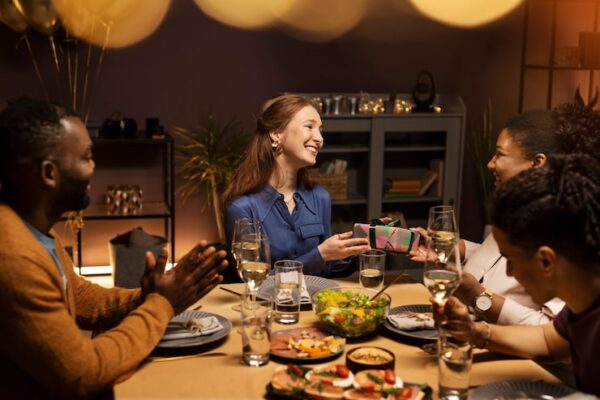
We have asked our guests — informally, in conversation, and formally through post-visit surveys — what live music does to their experience. The answers are remarkably consistent. Guests report staying longer, ordering more, and tipping more generously on entertainment nights. They describe feeling more relaxed at the table, more willing to engage with unfamiliar menu items, more likely to try a cocktail they would not normally order. They say the music “gives them permission” to slow down. In a culture that has built guilt around leisure and virtue out of efficiency, live performance seems to function as a kind of social release valve.
The social dynamics of the room shift too. Tables that might otherwise have remained sealed units — couples in their bubble, parties of four attending to their own conversation — begin to reference each other when a particularly arresting musical moment occurs. A guest will look up from the menu and catch the eye of a stranger at the next table, and something passes between them. The music becomes a shared object that briefly belongs to everyone in the room at once. This is not something we can manufacture through decor or lighting alone; it requires the irreducibly human element of live performance.
Behind the Curtain: How We Curate Every Performance
The mechanics of running a live entertainment program inside a working kitchen environment are genuinely complex. Sound check happens every performance night between four-thirty and six in the evening, before the first guest arrives. Our sound engineer mixes every show personally on entertainment nights, adjusting levels course-by-course as the room fills and ambient noise changes the acoustic equation.
Our kitchen team and entertainment program have developed a working rhythm over three years that functions, at its best, like a single organism. The chef communicates anticipated peak service times to the entertainment director, who then builds set breaks around those windows so the artists are between songs when the kitchen needs the room’s attention most focused on the food. Conversely, the kitchen times its most dramatic tableside presentations — the dry-aged whole rib roast carved tableside, the smoked bone marrow service — to coincide with musical interludes where the performers have already established the room’s attention.
Our performers are briefed before every show on the night’s private dining reservations and any celebrations happening in the room. A performer who knows there is an anniversary table at seat 14 can choose to acknowledge it musically — or not — based on their own artistic judgment. More often than not, these small gestures produce moments that guests describe as the highlight of their evening. This is the invisible art of live entertainment in a restaurant: making the planned feel discovered.
The word “modern” in our name was chosen with some care. In the restaurant industry, modern too often functions as a synonym for minimal — spare walls, curated playlists, studied restraint. We use it differently. Modern, to us, means responsive. It means built for what people actually want right now, which is connection, experience, and something worth recounting the next morning.
There is nothing modern about the idea of gathering around music and food — it is among the oldest forms of human celebration. But doing it with intention, with craft, with a commitment to the local artists who make a community’s culture, and with a kitchen skilled enough to hold its own alongside a live performance — that feels contemporary in the best sense.
About Tartan of Redlands
Established on April 15, 1964, Tartan of Redlands has become a long-standing dining landmark in the community. From the very beginning, the restaurant set out to create a welcoming space where guests could enjoy classic steakhouse cuisine served with genuine hospitality. It was founded by the Ctoteau brothers—Velmer, Al, and Art—who were dedicated to delivering quality meals and a friendly, neighborhood atmosphere.
Over the decades, leadership of the restaurant has changed hands, yet its guiding principles have remained consistent. Larry Westin joined the Ctoteau family in operating the establishment and played a key role in its continued growth for many years. After his passing in 2003, his son, Larry Westin Jr., carried the tradition forward until 2015. The restaurant is now owned and operated by Jeff and Lisa Salamon, who continue to honor its history while looking toward the future.
Jeff Salamon, a Boston native and Marine Corps veteran, brings a strong commitment to service, tradition, and community involvement—values that align with the restaurant’s longstanding culture.
Tartan of Redlands is well known for its classic steakhouse offerings, including premium cuts of steak, its popular Saturday prime rib special, and the well-loved Redlands Tartan Burger. Guests can also enjoy a full-service bar that enhances the overall dining experience.