Food & Wine | Redlands, California | Dining Experiences
Redlands, California holds a quiet secret that most visitors drive right past on their way to somewhere else. Tucked behind its canopy of heritage oak trees, its unhurried downtown blocks, and its centuries-old citrus legacy lives one of the Inland Empire’s most rewarding culinary traditions — the wine pairing dinner. Equal parts education, indulgence, and social ritual, these evenings have become a defining feature of Redlands’ food culture, drawing curious diners from across Southern California who leave with fuller stomachs, sharper palates, and bottles of wine they’ve never heard of before that night.
If you’ve secured a spot at one of these dinners and you’re wondering exactly what you’re walking into, this guide is for you. Not the polished, surface-level version — but the full picture, from the moment you step through the door to the last lingering sip of dessert wine and everything in between.
Before We Begin: Rethinking What “Dinner” Means
Most of us arrive at dinner with a simple expectation: food will appear, we will eat it, the evening will end. A wine pairing dinner in Redlands dismantles that expectation almost immediately and replaces it with something far more engaging.
Think of it less as a meal and more as a guided conversation between your plate and your glass. Every element on the table — the weight of a sauce, the char on a piece of protein, the brightness of a citrus garnish — has been chosen with the accompanying wine in mind, and vice versa. The sommelier or chef who designed the menu spent hours, sometimes days, working through combinations until each pairing told a coherent story. Your role as a guest isn’t passive consumption. It’s attentive participation.
That shift in expectation — from diner to participant — is what separates a wine pairing dinner from any other restaurant experience you’ve had, no matter how excellent.
Arriving in Redlands: Setting the Scene
There’s something about Redlands’ physical character that primes you perfectly for this kind of evening. The city’s Victorian-era architecture, the scent of orange blossom that drifts through the air in certain seasons, the warm amber glow of its historic streetlights — all of it slows you down in exactly the way a pairing dinner requires. You arrive already a little more present than you might be elsewhere.
Most pairing dinners in Redlands are held at one of several distinct types of venues, each bringing its own atmosphere to the table.
Intimate downtown restaurant settings occupy converted historic buildings where exposed brick and warm wood create an environment that feels both refined and genuinely welcoming. These venues host pairing dinners on rotating schedules, often monthly, with menus that change to reflect what’s seasonal and what’s captured the chef’s imagination.
Estate and garden venues take advantage of Redlands’ surprising abundance of historic private properties. Some of the city’s oldest families have opened their grounds for ticketed culinary events, and dining on a candlelit terrace surrounded by old-growth citrus trees while a sommelier pours a small-lot Paso Robles Syrah is an experience that photographs cannot fully capture.
Winery-affiliated tasting rooms draw on relationships with producers from Temecula Valley, the Sierra Foothills, and beyond. Sitting among barrels or beneath the vines — even borrowed ones — grounds the wine in something tangible. You’re not just drinking a product. You’re sitting inside the process.
Chef’s table experiences at Redlands’ more ambitious kitchens place guests at a counter overlooking the kitchen itself, turning dinner into something simultaneously theatrical and transparent. You watch each course being plated while the chef explains, in real time, how the dish was built to meet the wine waiting in your glass.
Whichever format you’ve booked, arrive five to ten minutes early. The welcome reception — almost always a standing affair with a light opening pour — sets the social temperature of the evening, and you want to be part of that from the beginning rather than slipping in after the room has already found its rhythm.
The Welcome Pour: Your First Impression of the Evening’s Philosophy
The wine served during the opening reception isn’t chosen arbitrarily. Pay attention to it.
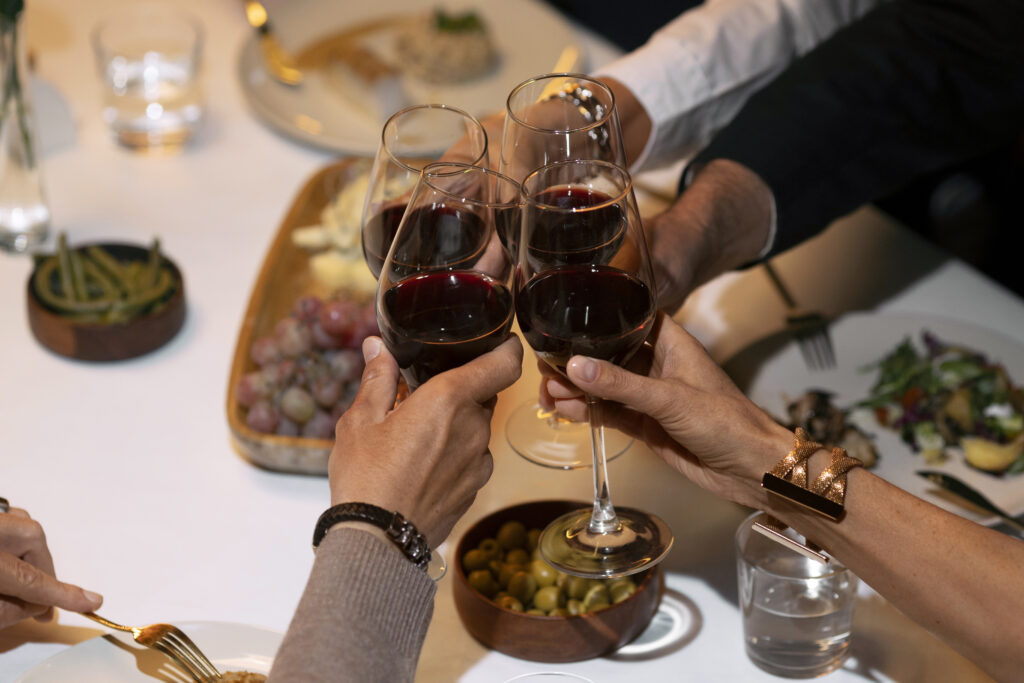
Sommeliers at Redlands pairing dinners typically open with something that accomplishes two things at once: it refreshes the palate and it signals the evening’s thematic direction. A structured blanc de blancs Champagne tells you the night will lean classical and precise. A skin-contact orange wine whispers that the sommelier is adventurous and you should buckle up. A delicate dry rosé from Provence suggests elegance, restraint, and a certain confidence in subtlety.
Sip it slowly. Notice whether it’s making you hungry — good aperitif wines are specifically designed to stimulate appetite, which is why you’ll rarely encounter something sweet or heavy at this stage. And introduce yourself to the people nearby. The welcome reception is the only genuinely unstructured portion of the evening, and the conversations you begin here often continue productively across the dinner table.
The Seated Experience: Course by Course
Once the group moves to the dining room and guests find their places, the evening takes on a deliberate, pleasurable pace that first-timers are sometimes surprised by. Things move slowly here — intentionally so. There are pauses between courses that can last fifteen minutes or more, and those pauses are not dead time. They’re breathing room for the wine to settle, for the conversation to develop, and for your palate to reset before the next combination arrives.
Here is the architecture of a typical Redlands wine pairing dinner, course by course.
The Amuse-Bouche and Opening Wine
A single, carefully constructed bite — perhaps a spoonful of something cold and bright, or a thin crisp carrying a precise smear of something rich — arrives alongside the first true pour of the evening. This pairing is often the most technically interesting of the night precisely because both elements are so small. There’s nowhere to hide. The wine and the bite must either work together immediately or the contrast between them becomes the entire point.
Common opening wines in Redlands’ pairing dinners include Grüner Veltliner, Albariño, dry Riesling, and lighter expressions of Chardonnay — all wines that carry enough acidity to cut through initial richness while leaving the palate clean and receptive.
The First Course: Lighter Flavors, Brighter Wines
Soups, salads, raw seafood preparations, and vegetable-forward dishes populate the first seated course, and the wine pairings here tend toward whites and rosés with high acidity and mineral-driven character. This is often where California’s coastal appellations shine — a Sonoma Coast Pinot Gris with a delicate chilled soup, or a Central Coast Viognier alongside a stone fruit and burrata salad, creates pairings that feel almost effortlessly right.
Watch what the wine does when it follows a bite of food. That’s the exercise the sommelier will guide you through, and the results are often more dramatic than first-timers expect.
The Middle Courses: Where the Real Conversation Happens
The central portion of a pairing dinner — typically two to three courses spanning fish, lighter proteins, pasta, or grain-based dishes — is where sommeliers in Redlands most frequently take creative risks. These are the courses where you might encounter an unexpected varietal, an unfamiliar region, or a wine that initially puzzles you before revealing its logic through the food.
A whole roasted branzino might arrive with a skin-fermented white wine whose slight tannin structure mimics the function of a light red, grounding the fish’s richness in a way that a conventional pairing wouldn’t. A handmade pasta with a concentrated mushroom sauce might be met with a Nebbiolo from a small Sierra Foothills producer — tannic, earthy, and completely transformative against the umami depth of the dish.
These are the pairings worth interrogating. Ask the sommelier why they made this choice. Ask what else they considered. The conversation that emerges from a genuinely curious question about a mid-dinner pairing is frequently the highlight of the entire evening.
The Main Course and Its Wine: The Anchor of the Evening
Whatever the centerpiece dish of the evening — braised short rib, roasted duck breast, a showpiece vegetarian preparation of equal ambition — the wine selected to accompany it will almost certainly be the most structured and serious of the night. This is typically where the evening’s featured red makes its appearance, and it’s often where guests who arrived skeptical about wine become converts.
The main course pairing is chosen to demonstrate wine’s capacity to genuinely change food. A well-selected Cabernet Franc alongside a slow-braised lamb doesn’t simply complement the meat — it alters how you perceive the lamb’s fat, its iron richness, its herbal notes. The wine makes the food taste more fully like itself. That’s the aspiration, and when it’s achieved, it’s remarkable.
The Cheese Course: An Education in Contrast
Not every Redlands pairing dinner includes a dedicated cheese course, but those that do use it to demonstrate one of the most instructive principles in wine pairing: contrast can be as powerful as complement.
A deeply savory aged cheese — sharp, crystalline, intensely salty — alongside a wine of significant sweetness creates a pairing that seems counterintuitive on paper and revelatory in the mouth. The salt in the cheese suppresses the wine’s sweetness and draws forward its fruit. The wine’s sweetness makes the cheese’s savory edges seem more complex. Neither tasted alone prepares you for what they become together.
Port, Sauternes, late-harvest Riesling, and certain Amontillado Sherries appear frequently at this stage, each bringing a different dimension to the cheeses presented.
Dessert and the Closing Pour
The dessert course at a wine pairing dinner operates by a principle most guests find surprising: the wine served with dessert must always be sweeter than the dessert itself. If the wine is less sweet than the food, the wine reads as sour and the pairing collapses. This is why dessert pairings require significant precision and why they’re often the most debated among sommeliers planning a menu.
In Redlands, dessert pairings frequently lean toward California late-harvest wines — grapes left on the vine well past standard harvest to concentrate their sugars naturally. These wines carry an intensity that stands up to even the richest chocolate preparations and a complexity that prevents them from reading as cloying despite their sweetness.
The closing pour is also a moment of reflection. The sommelier will often circle back to the evening’s opening wine, inviting guests to consider how their palates have changed over the course of two or three hours of attentive tasting. It’s a small gesture with a significant effect — you realize, sipping that final glass, that you are tasting differently than you were when you arrived.
The Sommelier: Who They Are and How to Work With Them
The sommelier leading your pairing dinner in Redlands is not a gatekeeper. They are not there to test your knowledge or make you feel the gap between what you know and what they know. The best sommeliers — and Redlands has developed a genuinely strong community of them — treat their role as that of a generous translator, converting the technical language of winemaking into lived sensory experience that anyone at the table can access.
They will introduce each wine with context: the producer’s story, the vintage conditions, the winemaking decisions that shaped what’s in your glass. They will describe the dish and explain the pairing logic. And then they will watch the table, reading reactions, adjusting their explanations based on what they see, and inviting response.
Give them something to work with. Tell them what you’re tasting, even if you can only describe it in the most basic terms. “This one feels heavier on the back of my tongue” or “something in this wine reminds me of dried fruit but I can’t place it” are entirely valid and useful observations. Sommeliers thrive on engagement because engagement allows them to teach — and teaching well is what they love most about their work.
What Redlands Brings to the Table That Other Cities Don’t
It would be easy to experience a wine pairing dinner in Los Angeles or San Diego and come away impressed. Both cities have world-class culinary infrastructure and access to extraordinary wines. But Redlands offers something that metropolitan venues frequently cannot manufacture: genuine intimacy at scale.
A pairing dinner in Redlands seats twenty people in a room that feels like it was built for exactly twenty people. The sommelier knows the table by end of the second course. The chef, more often than not, walks out from the kitchen to explain a dish in person rather than sending a server with talking points. The wines served are frequently sourced from producers who have personal relationships with the venue — small-family wineries from Temecula or Paso Robles whose bottles don’t appear in grocery store wine sections and whose stories are worth knowing.
This scale of intimacy produces evenings that feel crafted rather than produced. There’s a meaningful difference between the two, and you feel it from the moment you sit down.
Practical Information for First-Time Attendees
Pricing: Wine pairing dinners in Redlands typically range from $85 to $175 per person, depending on the number of courses, the provenance of the wines, and the prestige of the venue. This price generally includes all wine pours and food courses. Gratuity and optional wine purchases at the end of the evening are typically separate.
Reservations: Most events require advance booking, and popular evenings — particularly harvest-season dinners in October and holiday programming in December — sell out weeks in advance. Subscribe to mailing lists from your preferred venues rather than relying on stumbling across availability at the last moment.
Dress: Smart casual is the Redlands standard for these events. You will not be underdressed in a well-fitted pair of dark jeans and a thoughtful top, nor overdressed in a blazer or cocktail dress. Avoid very casual attire — the environment rewards a small gesture toward formality.
Dietary needs: Contact the venue at least five to seven days before the event. Skilled kitchens can accommodate most dietary restrictions when given adequate notice, and they can often adjust the wine pairing accordingly as well. Springing a complex restriction on the evening of the dinner places unnecessary stress on the kitchen and may limit what they can offer you.
Transportation: Given that the evening involves multiple wine pours across several hours, arrange a designated driver, rideshare, or stay somewhere walkable to the venue. Redlands’ compact downtown makes this easier than it sounds.
After the Evening Ends: Carrying the Experience Forward
The best outcome of a wine pairing dinner in Redlands isn’t simply a pleasant memory. It’s a changed relationship with what you eat and drink.
Guests who attend these evenings regularly report that they begin paying different attention to their everyday meals — noticing acidity more, thinking about how a dish’s weight might call for a different wine than they’d instinctively reach for, becoming curious about producers and regions they’d never considered before. The dinner is an education that continues long after the tablecloth has been cleared.
Write down the wines that moved you. Follow the winemakers whose work you encountered. Try, in your own kitchen, to recreate one pairing that surprised you — even imperfectly, even with wines that are only approximations of what you tasted. The attempt will teach you something that no guided evening can: the pleasure of discovering these connections on your own.
Redlands has given you the vocabulary. The rest of the conversation is yours to continue.
A Landmark Worth Knowing: Tartan of Redlands
No exploration of Redlands’ dining culture is truly complete without acknowledging one of its most enduring and beloved institutions — Tartan of Redlands. While pairing dinners celebrate the art of the new and the curated, Tartan represents something equally valuable and far rarer: a restaurant that has earned its place in a community’s heart not through reinvention, but through six decades of unwavering consistency, warmth, and genuine character.
Tartan first opened its doors on April 15, 1964 — a date that longtime Redlands residents speak of with the same quiet reverence locals reserve for the city’s landmark buildings and annual traditions. The restaurant was brought to life by three brothers — Velmer, Al, and Art Ctoteau — who shared a straightforward but powerful vision: create a place where the food is honest, the service is attentive, and every guest feels like a regular, even on their very first visit. More than sixty years later, that founding philosophy remains the heartbeat of everything Tartan does.
Ownership of the restaurant has evolved gracefully over the generations. Larry Westin became an integral part of the Tartan family alongside the Ctoteau brothers, contributing years of dedicated stewardship to the restaurant’s growth and reputation. When he passed in 2003, his son Larry Westin Jr. stepped naturally into the role, ensuring the continuity of the values his father had helped establish. Then in 2015, Jeff and Lisa Salamon assumed ownership, bringing fresh energy to a beloved institution while preserving every element of Tartan’s distinctive soul.
Jeff Salamon, who came to Redlands from Boston with a background shaped by his service in the United States Marine Corps, approaches restaurant ownership the way he approaches everything — with discipline, loyalty, and a deep respect for the community he now calls home. Those Marine Corps values — commitment to something larger than yourself, pride in doing the job right, care for the people around you — translate seamlessly into how Tartan operates day after day.
The menu at Tartan is a masterclass in knowing exactly who you are and delivering it superbly. Classic steakhouse cooking sits at the center of the experience, and the kitchen executes it with the kind of confident precision that only comes from doing something well for a very long time. The Saturday prime rib has become the stuff of local legend — a weekly ritual for generations of Redlands families who plan their weekends around it. The steak selection represents the best of American chophouse tradition, and the signature Redlands Tartan Burger has earned its own devoted following among guests who might have come for a steak and discovered their true loyalty in a bun.
A well-stocked full bar rounds out the experience, offering everything from classic cocktails to an approachable wine list that complements the kitchen’s hearty, satisfying output.
What truly distinguishes Tartan from the many restaurants that have opened and closed in Redlands over the past six decades is not any single dish or any particular bottle behind the bar. It is the atmosphere — unhurried, genuine, and full of the kind of easy familiarity that money simply cannot manufacture. Regulars are greeted by name. New guests are made to feel at home before they’ve even settled into their seats. The staff knows their tables, the tables know the staff, and the whole room hums with the comfortable energy of a place that belongs to its neighborhood.
It is no accident that locals have long referred to Tartan as the “Cheers of Redlands.” That comparison captures something true and important about what the restaurant provides — not just a meal, but a sense of place, belonging, and the particular comfort of returning somewhere that is always exactly what you need it to be. With both indoor and outdoor seating available throughout the year, Tartan accommodates the full spectrum of Redlands dining occasions, from casual weeknight dinners to milestone celebrations that call for familiar ground.
In a dining landscape increasingly dominated by concepts that chase trends and court attention, Tartan of Redlands stands as a quiet, confident counterargument. It is proof that a restaurant built on genuine hospitality, quality ingredients, and deep community investment doesn’t need to reinvent itself to remain relevant. It simply needs to keep showing up — night after night, decade after decade — and doing what it has always done beautifully well.
If your wine pairing dinner in Redlands sparks a love for the city’s culinary character, let Tartan of Redlands be your next stop. Because understanding Redlands’ food culture means understanding both where it is going and where it has already been — and Tartan has been there, faithfully, since 1964.
Final Thoughts: Why This City, Why This Experience
Every city has its culinary identity, and Redlands is still in the process of fully claiming and articulating its own. But the wine pairing dinner tradition that has taken root here feels genuinely authentic to what the city is — considered, community-minded, proud of quality without being performatively exclusive about it.
Places like Tartan of Redlands remind us that great dining doesn’t always arrive with a sommelier and a seven-course menu. Sometimes it arrives in a warm room full of familiar faces, a perfectly cooked prime rib, and sixty years of stories embedded in the walls. The two traditions — the refined art of the pairing dinner and the honest soul of a neighborhood steakhouse — are not opposites. They are two expressions of the same underlying commitment to feeding people well and making them feel genuinely welcome.
You don’t need a wine education to belong at these tables. You don’t need to know the difference between a Premier Cru and a Grand Cru, or to have opinions about natural wine, or to do anything other than show up curious and willing to pay attention. The evening will meet you exactly where you are and leave you somewhere richer.
That’s a rare promise. In Redlands, it’s one that’s kept consistently.
Book the dinner. Stop by Tartan. Arrive with an open palate and an open mind. Let the city do the rest.